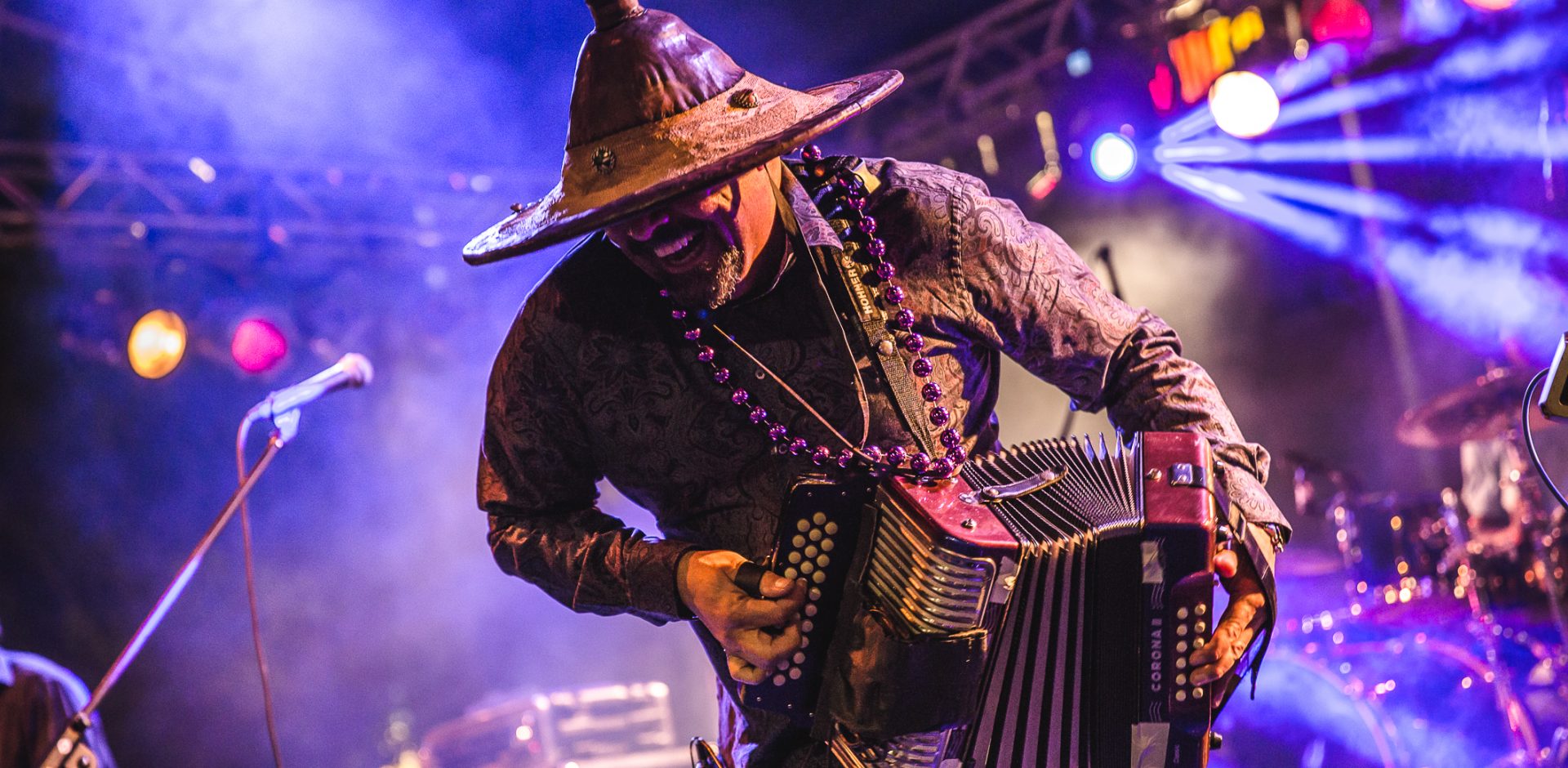
While perhaps not as intimately known outside Louisiana, zydeco has reached stages around the globe. The Black Creole communities where it was born continue to nurture its joyful, untamed heartbeat.
Down in southwest Louisiana—bayou country to many—lives a music all its own. At first, French Creole floats on the air, but listen closer, and you’ll hear the soul of blues and the liveliness of the Caribbean woven into every note. It’s a sound like no other.
This is zydeco, and just as alive as the music are the people and the history behind it.
Grammy Award-winning musician Terrance Simien, a central figure in the global rise of zydeco, highlights how African and Caribbean rhythms form the foundation of the genre, reflecting the struggles and resilience of Black Creole communities.
> “The Creoles would sing about their pain and their joy, clapping their hands and stomping their feet,” he says.
Historic traditions remain central to the genre’s identity. Simien points to John Avery Lomax, the pioneering American folklorist who collected and preserved thousands of rural American folk songs.
> “John Lomax called juré one of the most African sounds he’d found in this country,” Simien says.
Juré, a traditional a cappella Creole singing style, remains a cornerstone of zydeco, linking the music directly to communal dances, rhythms, and African roots that shaped the genre.
Simien has also helped bring zydeco to broader audiences, notably contributing his authentic sound to Disney’s *The Princess and the Frog* in songs such as “Gonna Take You There.” Millions of listeners may have danced to his rhythms without realizing they were hearing the distinct Creole heartbeat of zydeco.
> “I have a responsibility to represent my people, their culture and their history with integrity—but also to make my audience feel joy,” he says.
That responsibility, Simien says, was shaped by the musicians who came before him.
> “I’m fortunate to be the last generation to also have a direct link to some of the elders. They were my role models, and I heard some of their stories, but they all had such incredible integrity as people and professionals that they persisted and excelled in their careers.”
That legacy was forged under segregation and exclusion—realities Simien experienced firsthand even as zydeco reached wider audiences.
> “I too faced discrimination in Louisiana during the ’80s, though not to the same degree as my zydeco elders,” Simien says. “I remain mindful and forever grateful for the support I received from people outside my Creole community when I started my music career.”
That same period marked a turning point for zydeco itself. The genre experienced national visibility in the 1980s, with pioneers such as Clifton Chenier, Queen Ida, and Buckwheat Zydeco bringing the sound of rural Creole dance halls into mainstream consciousness.
Gene Tomko, a writer, photographer, and music historian, emphasizes the importance of those early spaces.
> “Two of zydeco’s first and most important dance halls opened in the late 1940s,” Tomko says. “It’s due to a combination of misinformation, lazy journalism, and people outside the region not being directly exposed to both cultures that it’s often mischaracterized as Cajun music.”
> “Creole music was strongly influenced by the blues and African and Afro-Caribbean rhythms. Cajun music is much more rooted in European traditions.”
That distinction matters, shaping both the music and its culture.
> “One very special thing about Louisiana music, particularly in southwest Louisiana, is how ingrained it is in the community,” Tomko adds. “It’s as important to the culture as the people themselves. That connection creates truly special moments for both musicians and audiences.”
Longtime journalist and Creole culture historian Herman Fuselier echoes that concern.
> “The national media often treats zydeco as a byproduct of Cajun music when both share French roots but have evolved into different genres,” Fuselier says. He warns of the dangers of cultural erasure. “I hope young Black Louisianians remember it was their people who created this culture. If you don’t know that history, learn it.”
For Fuselier, zydeco’s survival depends on both memory and active participation.
> “Nothing, including culture, survives without the almighty dollar,” he says. “Invest in all things Creole.”
That perspective is shared not only by scholars but by musicians themselves.
Jeffery Broussard, a zydeco accordionist and singer raised in Lafayette, Louisiana, grew up in a deeply musical Black Creole household immersed in French la-la, gospel, and juré traditions.
> “Growing up in a musical household, that was all I knew,” Broussard says. “Daddy played music, and Mama sang … my Creole roots are planted deep.”
Broussard’s first public performance came at age 8, and he quickly understood the music’s power.
> “It was like medicine to the soul,” he says. “I knew then I wanted to make people happy like that.”
He stresses the importance of preserving the music’s identity.
> “What’s more important is people not confusing Cajun music with Creole music,” Broussard says. “It’s all the way different. It’s Creole zydeco.”
For musicians like D’Jalma Garnier, zydeco is both heritage and responsibility. Garnier, a Creole and Cajun fiddler who apprenticed under legends such as Canray Fontenot, began his professional career in 1993, leading the band Filé.
He points to the music’s deep connection to dancers and its African roots.
> “Zydeco has a lot of African retentions, very visible from the stage and the dance floor, with a long history of dance,” Garnier says.
By watching the dance floor closely, Garnier earned the respect of his peers.
> “The respect I garnered from all my zydeco brothers came from very focused hard work,” he says. “I played to the dancers’ rhythm on the floor.”
For Garnier, zydeco is more than music. In its history and roots, he found family and brotherhood.
> “When I started with Filé in 1993, all our fiddle mentors were still alive,” he says. “I felt the weight, along with others, of their departure.”
His career underscores an essential truth: zydeco is not just music to be heard—it is music to be felt, lived, and danced.
The story of zydeco is as much about people as it is about sound. From Creole dancers in small Opelousas dance halls to international audiences on Grammy stages, zydeco remains a living expression of a resilient culture—joyous and soulful, yet deeply rooted in history, survival, and pride.
Simien puts it simply:
> “I hope that more people understand how our own African American and Black history in Louisiana and the Deep South has informed and shaped our music. Our struggles and our victories.”
Simien remains hopeful as younger artists take ownership, evolving the music and keeping zydeco vibrant, unapologetically Creole and unmistakably its own.
> “Knowing how our younger, emerging artists are following the tradition of owning their artistry and evolving the music keeps hope alive,” he says.
https://thenichollsworth.com/7015078/uncategorized/the-colorful-world-of-zydeco/