Nintendo and Koei Tecmo have made a fairly loyal fan of me over the course of several Warriors collaborations and spinoffs this last decade and then some. I’ve been particularly enamored with the fact that KT isn’t just strapping fan-favorite characters to the Musou formula. Instead, it is augmenting that formula with adaptations of the mechanics from the franchises it is handling. Such was the case with *Hyrule Warriors: Age of Calamity* and *Fire Emblem Warriors: Three Hopes*, and now it’s happened again with *Age of Imprisonment*.
Only this time, Koei Tecmo has utilized the power of the Switch 2 to make an altogether better performing game and a worthy spinoff to the excellence that was *Tears of the Kingdom*.
### Crisis in Ancient Hyrule
Springboarding from the events of *Tears of the Kingdom*, *Hyrule Warriors: Age of Imprisonment*, like *Age of Calamity*, touches upon events that were teased but never explored in-depth. This time, the focus is on the war between the original King of Hyrule, Rauru, and the Gerudo chieftain turned Demon King, Ganondorf.
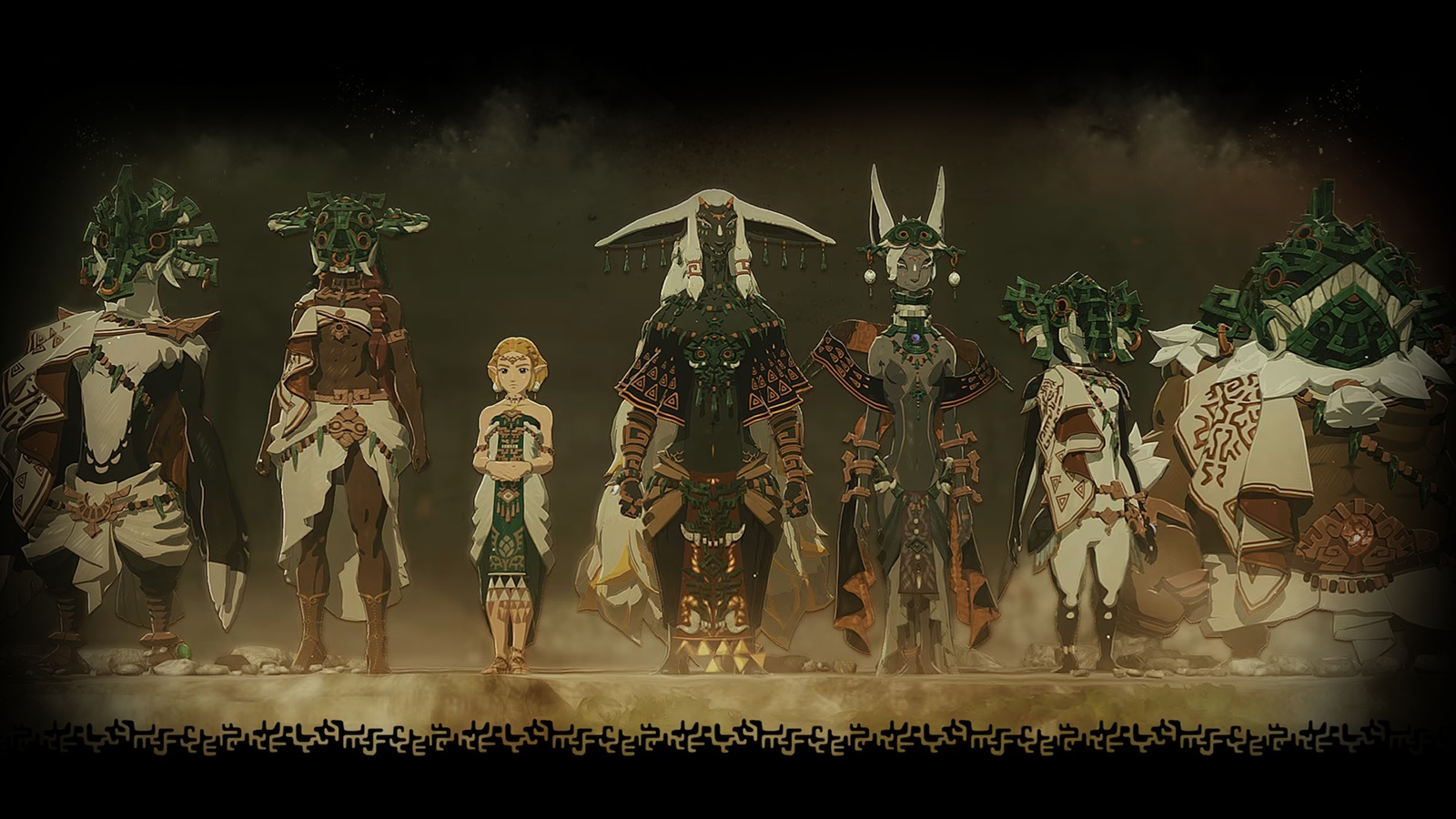
If you played *Tears of the Kingdom* through, you probably know how this turns out, but *Age of Imprisonment* still tells us the in-depth story that saw Zelda strive to reunite with Link in the future. We get a lot of time with characters that were only in the periphery of *Tears of the Kingdom*. Zelda and Rauru are pretty well-known by this point, but *Age of Imprisonment* puts the spotlight on many faces we only briefly got to know in the fragmented Memories of *TotK*: all of the original Sages, the Zora Queen Qia; Rito Elder Raphica; Gerudo Chief Ardi; the Goron Chief Agraston; and Rauru’s sister, the Sage of Spirit, Mineru.
We even get some new faces like the Korok Calemo, and the Mysterious Construct. Although the latter is kind of a gameplay stand-in for Link, it features unique aspects and story elements that make it a more-than-worthwhile substitute.
As with *Age of Calamity*, *Age of Imprisonment* takes some liberties with the story of *Tears of the Kingdom*. It stays true to the main story. The key events are what you should expect if you played *TotK*, but the Mysterious Construct, Calemo, and other factors introduce wrinkles that take this story in fun and interesting directions.
### A Visual and Gameplay Feast
It’s all presented magnificently, at least in gameplay. The action in *Age of Imprisonment* is crisp, the battlefields are vast and beautiful, and the characters and enemies are as vibrant and lush as they’ve always been in the *Breath of the Wild* era of Zelda.
The battles and in-mission action are even cleaner here, running smoothly whether you’re playing in Docked or Handheld Mode. The only part where the visuals sag a bit is, strangely, in cutscenes. They are often noticeably at a lower frame rate than the rest of the game and sometimes stutter.
### A Soundtrack That Could Use Some Fire
Music is another place where I was shockingly underwhelmed by *Age of Imprisonment*. I consider *Age of Calamity* to be one of the best game soundtracks ever, and the *Fire Emblem Warriors: Three Hopes* OST was no slouch either. I was hoping to find the same electricity in *Age of Imprisonment*’s music, but it’s just not there.
Don’t get me wrong, it’s not bad and thematically echoes *Tears of the Kingdom*’s aesthetic for a few interesting battle tracks, but a lot of the battle music felt like droning background noise—even at particularly key points. The stage where Ganon becomes Demon King and forces Rauru, Zelda, and the remnants of the Hyrule Kingdom to make a desperate escape deserves an equally intense battle track, not background noise.
We’ve definitely had better from *Hyrule Warriors*, and I guess I just wanted more fiery music to match the glow-up in visuals and story.
### Hone Your Sacred Power
The *Hyrule Warriors* games are probably my favorite version of the Musou games for how much they take from the parallel main games and incorporate that into gameplay. The developers could easily have just duct-taped the Musou gameplay style onto the universe and launched it (and have before), but that’s just not the case here.
Like *Age of Calamity*, *Age of Imprisonment* specifically incorporates very unique *Tears of the Kingdom* mechanics to create engaging twists in combat.
At its foundation, *Hyrule Warriors: Age of Imprisonment* plays like other Musou games in that you take control of your favorite characters and battle on massive maps full of outposts, enemy commanders, and ultimately, bosses and main objectives. Many of the improvements Koei Tecmo has been employing in its style are here, including the ability to select and direct uncontrolled characters toward various objectives or assignments like escorting another character.
You battle enemies down to a weak point and then let loose with a special attack that generally levels your foe and the crowd of small fry around you in explosive style.
Calemo, the Korok, might have been my favorite here. He’s a funny little rascal who uses different elemental seeds in combat depending on which part of the string you end your combo on—a great way to exploit enemies’ elemental weaknesses. He also just throws a full hornet hive at his enemies when he gets serious.
### Unique Combat Mechanics: Zonai Devices and Skill Attacks
Where *Age of Imprisonment* starts to set itself apart is in the use of Zonai Devices and Skill Attacks.
Throughout the game, leader enemies will use attacks that can be answered with specific counterattacks of your own to interrupt and stun them. For example, if an enemy uses a jumping attack, using an anti-air skill or Zonai Device like the Cannon will knock them out of it. If enemies use a defensive attack, a shield-breaking skill or the Zonai Bomb will shatter their defenses.
Each character can equip a combo of five skills and Zonai Devices. But don’t worry if one character doesn’t have the answer to a particular attack type, because another important system comes into play.
If an enemy uses an attack and you have a nearby, uncontrolled character who counters that attack, you’ll sometimes be prompted to switch to them, and they will automatically launch that countering skill. This not only does damage but also builds your Sync Meter, which is probably my favorite thing in *Age of Imprisonment*.
When two characters’ Sync Meters are full, they can combine to launch a unique Sync Attack depending on the characters used. For instance, Zelda and Rauru use their powers of Light to launch two beams that you can control individually until they fire off a final combined beam. Meanwhile, with Zelda and Mineru, Mineru calls in her Zonai Mech Construct while Zelda pilots it, unleashing a barrage of strikes and lasers.
Some Sync Attacks recycle effects depending on the character pairing, but they are generally all tide-turning and an exciting addition to offense in *Age of Imprisonment*.
### Story Structure and Sidequest Padding
*Age of Imprisonment* is broken up into chapters, each with story missions that move the narrative along. However, one of my least favorite things about Warriors games once again reared its ugly head here: sidequest padding.
As you progress, most of the main missions are engaging and fun, and the story is worth exploring. But between main missions, you’ll be hit with a storm of little side tasks.
Some sidequests are well worth doing, as they unlock shops or power up your heroes’ health, basic attacks, and skill attacks. However, many are simply repeated battles on maps you’ve already visited against enemies you’ve fought before.
There’s also a system where you must liberate regions of the Hyrule map from Ganondorf. After liberating an area, a side battle may pop up to defend that territory or risk losing it if left unchecked. It’s meant to represent the war between Ganondorf and Rauru but ends up feeling repetitive.
While some of this padding is skippable, a lot isn’t because you need to level up your characters for upcoming main battles. It sometimes feels like a stretch of video game chores between the big moments.
### To Arms, for the Future of Hyrule
*Hyrule Warriors: Age of Imprisonment* is both an excellent companion to *Tears of the Kingdom* and a fantastic evolution of the Musou style.
Trying out Switch Skills and Sync Attacks between practically every pair of characters was one of my favorite aspects of the game, and I hope Koei Tecmo incorporates something like this in future titles.
I love how deeply *Ultrahand* and Zonai Devices are incorporated into this roster’s moves. Mineru is a queen—throwing her Zonai mastery around the field is immensely satisfying. Rauru is just as awesome with his Ultrahand and Spear of Light, and the rest of the cast is a treat in their own unique ways. Calemo and the Mysterious Construct also keep things fresh, even though we all know how the story goes.
I wish the soundtrack had packed more heat, but it’s hard to ask for much more from a sequel that is otherwise so much improved.
I don’t know if Nintendo will treat this *Age of Imprisonment* as canon, but if it’s the final ribbon on the *Breath of the Wild* era, it’s a dang good one.
—
*This review is based on a Nintendo Switch 2 digital copy of the game supplied by the publisher. Hyrule Warriors: Age of Imprisonment releases on November 6, 2025, for Switch and Switch 2.*
https://www.shacknews.com/article/146650/hyrule-warriors-age-of-imprisonment-review-score