A majority of House Republicans voted to uphold President Donald Trump’s veto of the Finish the Arkansas Valley Conduit Act, despite a bipartisan and bicameral Colorado push to convince lawmakers to override the veto. The final vote was 248-177, with all Colorado members supporting the bill that would help a project to bring clean drinking water to about 50,000 Coloradans in the southeastern part of the state. In the end, only 36 Republicans voted to override.
Going into the vote, GOP Rep. Lauren Boebert, who introduced the bill, had been hopeful that the override effort would meet the two-thirds vote threshold but understood the tough politics many of her Republican colleagues faced — “and folks not wanting to get cross with the president. But no one is denying the actual policy of the legislation.”
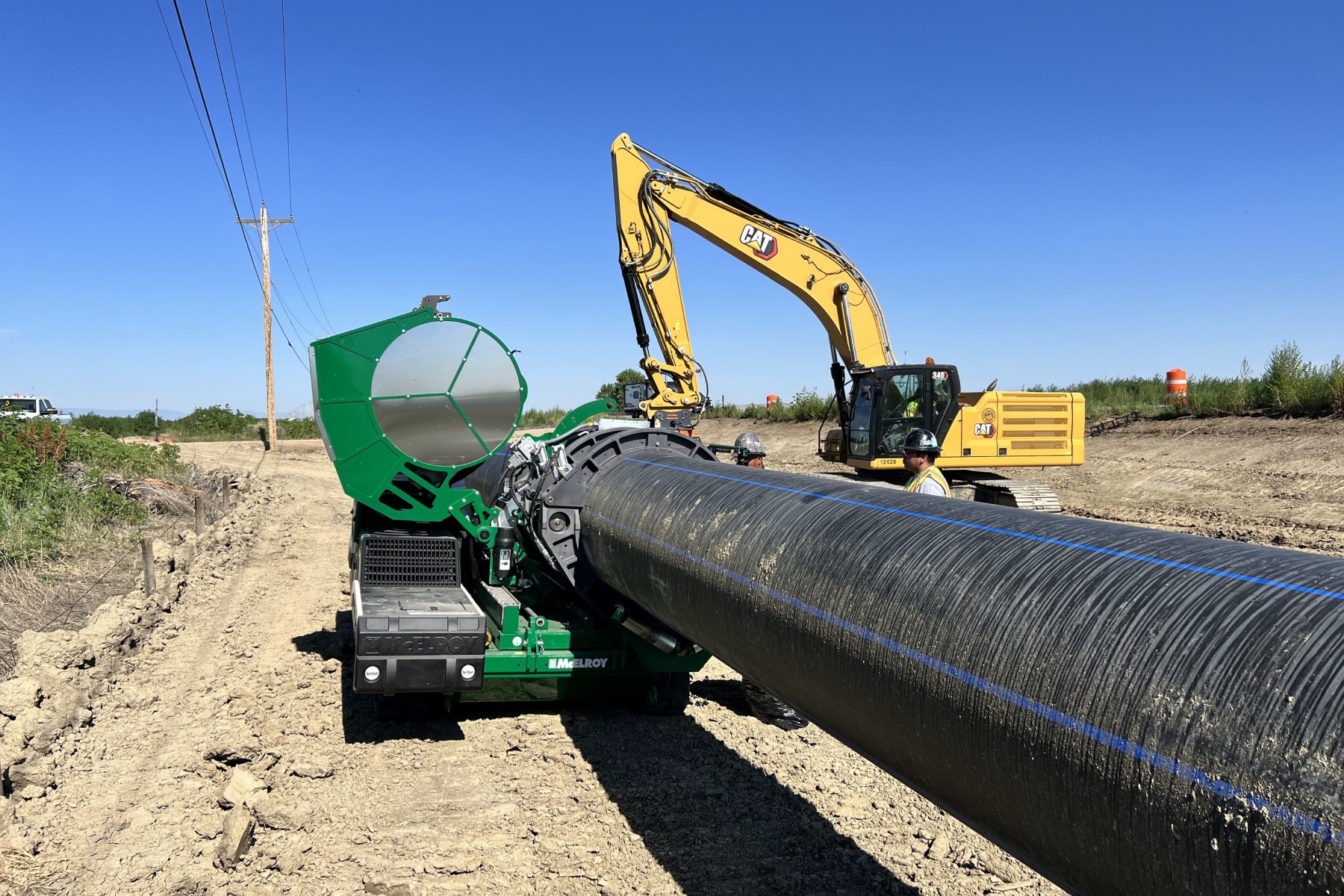
The bill extends the repayment period for water users involved in the Arkansas Valley Conduit (AVC) water pipeline project from 50 years to 100 years and lowers the interest rate on repayment. According to a Congressional Budget Office (CBO) estimate, it would cost the federal government less than $500,000 and would not impact federal revenues. That was the key policy point Colorado lawmakers emphasized during the floor debate.
“The Bureau of Reclamation has found that these contamination levels [in the groundwater] are so severe that local communities could see the cost of their drinking water triple without this legislation,” Boebert said while urging her colleagues to vote to override the veto. She added, “I want to boldly remind my colleagues here today that this project broke ground during the first Trump administration in 2020, due to major investments from the Trump-led Bureau of Reclamation and the state of Colorado.”
All the Colorado speakers hammered home that the bill does not appropriate more money to the project.
“This bill will cost taxpayers virtually nothing,” said Democratic Rep. Joe Neguse, “and it makes good on a promise to the people of rural Colorado.” He argued the chamber could not let Trump’s retaliation against Colorado “become the new normal.”
“It does not matter if your community supported Trump politically. If we don’t take this step, trust me, no town is safe, no county is safe, no state is safe from political retaliation by the administration,” he said addressing both sides of the aisle. “We will be back here on the floor debating a veto for a project in Arkansas or in Texas. The House has an opportunity, in my view, to do the right thing on the merits, to support this important legislation.”
GOP Rep. Jeff Hurd added that this was not a messaging or symbolic vote; this was a personal vote.
“This is a test of whether Congress keeps its word, not just to southeastern Colorado but to every community in every state and in every district that depends on federal commitments being honored,” he said. Hurd pointed out how rare it is for a president to veto a bill that passed both chambers unanimously while the president’s party has unified control of government.
“And I ask my colleagues, how would you feel if a project like this in your district, passing unanimously, fulfilled a decades-long promise and was vetoed anyway? That’s what these rural communities are facing,” Hurd said. “This vote is not about defying the president. It’s about defending Congress.”
No one spoke in support of Trump’s veto during the debate. GOP Rep. Bruce Westerman, chair of the House Natural Resources Committee, said he respects Trump’s view on the bill and the administration’s “commitment to fiscal responsibility.”
Failure to override the veto means Colorado lawmakers will have to find another way to pass the legislation, potentially as part of another legislative package.
The Colorado delegation presented a united front before the vote. A “dear colleague” letter sent Wednesday night from Neguse, Boebert, and Hurd to Democratic House members said, “we would be grateful if you could maintain your support and vote in favor of the bill.” The letter emphasized the bill’s “virtually no cost” to taxpayers and highlighted that it will benefit “largely rural and economically vulnerable communities that have waited generations for the federal government to fulfill its promise.”
In anticipation of the bill coming to the Senate for a veto override, Senators Michael Bennet and John Hickenlooper and Reps. Boebert and Hurd sent a similar letter to Senators on Wednesday. It pointed out that the bill passed both chambers unanimously.
“The Constitution expressly provides Congress with the power to override a presidential veto. Although that authority must be used judiciously, we believe it is especially appropriate in cases where Congress passed legislation unanimously and with bipartisan agreement,” the letter said.
“If Congress allows a precedent to be set for non-controversial, bipartisan bills to be vetoed for reasons unrelated to their substance, no bill is safe and the efforts of every elected member of Congress to represent his or her constituents will be at risk.”
In his veto message, Trump pointed to the cost of the project as the reason for his objection, even though the bill does not direct funding to the program.
He said the bill “would continue the failed policies of the past by forcing Federal taxpayers to bear even more of the massive costs of a local water project — a local water project that, as initially conceived, was supposed to be paid for by the localities using it.”
During his first term, the Trump Administration helped kickstart federal funding for the project with a $28 million investment. The Biden Administration also contributed funding as overall costs rose due to inflation and supply chain issues.
In 2016, the initial estimate for the project was around $600 million. It’s currently estimated to be more than $1.3 billion.
The Trump administration has been pushing for state and local governments to take on more costs from disaster recovery to infrastructure. Still, some Democrats argued the veto is actually retaliation for Colorado keeping former Mesa County Clerk and election denier Tina Peters in state prison after she was sentenced for allowing unauthorized access to her election machines.
Others suspected Trump was angry at Boebert for pushing for the release of files related to the investigation into pedophile Jeffrey Epstein. After the veto message was released, Boebert expressed hope it was not political retaliation for “calling out corruption and demanding accountability.”
Boebert was one of four Republicans who signed a discharge petition to force a vote on releasing the Epstein files.
https://www.cpr.org/2026/01/08/house-trump-arkansas-valley-conduit-veto-override-fails/