Dairy Queen Rival Files for Bankruptcy
Freddy’s Frozen Custard & Steakburgers franchisee M&M Custard filed for Chapter 11 protection on Friday.
Freddy’s Frozen Custard & Steakburgers franchisee M&M Custard filed for Chapter 11 protection on Friday.
The post GBP/USD remains subdued below 1. 3150 ahead of UK flash Q3 GDP data appeared com. GBP/USD remains subdued for the third successive session, trading around 1. 3120 during the Asian hours on Thursday. Traders await the United Kingdom (UK) flash Gross Domestic Product (GDP) data for the third quarter due later in the day. The Pound Sterling (GBP) faced challenges against its peers amid growing expectations that the Bank of England (BoE) will cut interest rates in December. BoE policymaker Megan Greene stated on Tuesday that wage settlement data for next year is higher than desired and expressed concern about persistent inflation in the UK, suggesting that monetary policy may need to be more restrictive. The GBP/USD pair also struggles as the US Dollar (USD) advances amid optimism that the prolonged US government shutdown could be resolved this week. The House of Representatives voted 222 to 209 to approve a funding package and end the longest government shutdown in US history on Wednesday. The Bill is now clear to be signed by US President Donald Trump. Earlier this week, Trump already backed the bipartisan deal to end the impasse. The bill’s approval will release a tranche of economic data pending release, except for October’s inflation and jobs data. White House Press Secretary Karoline Leavitt said on Wednesday that the October jobs and inflation data reports are unlikely to be released. The US Dollar also gained support from hawkish Fedspeak, which decreased the odds of a Federal Reserve (Fed) rate cut in December. The CME FedWatch Tool shows markets pricing in nearly a 60% chance of a 25-basis-point Fed rate cut in December, down from 67% a day ago. Federal Reserve (Fed) Bank of Atlanta President Raphael Bostic addressed economic trends at the Atlanta Economic Club on Wednesday. Bostic cautioned that easing policy too soon could “feed the inflation beast,” while noting that a sharp downturn in.
The Alabama Farmers Federation announced its endorsements for the two seats from Pickens, Tuscaloosa and Marshall counties. Continue reading.
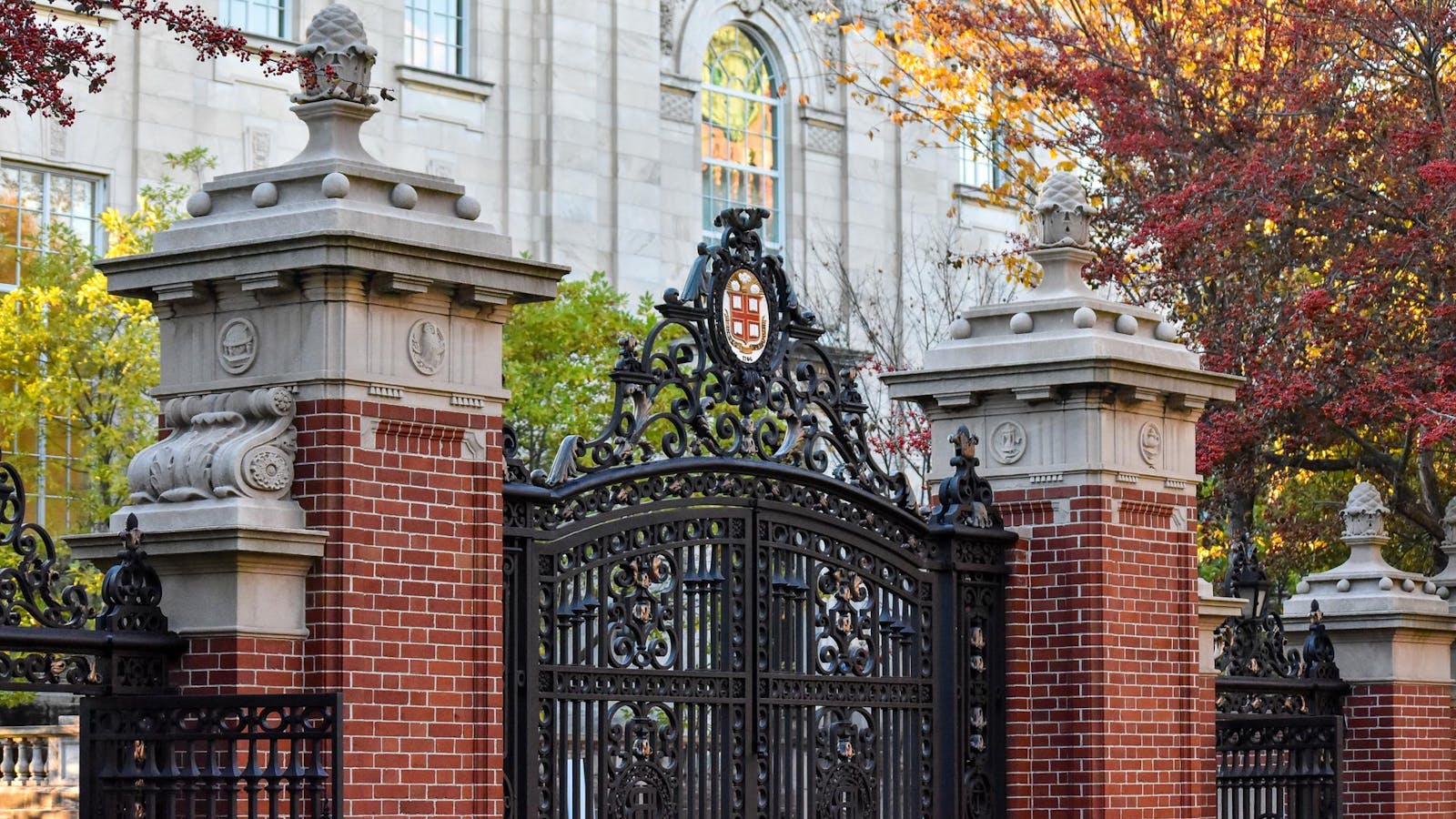
On March 27, the U. S. House of Representatives passed the Deterrent Act. As it awaits a Senate vote, Brown is continuing its yearslong fight against the piece of legislation. The Deterrent Act is purported to improve research security and reduce foreign malign influence on universities. In reality, however, the bill would function as another federal overreach on institutions of higher education rather than an effective measure for upholding academic freedom. Under Section 117 of the Higher Education Act of 1965, universities are required to disclose foreign donations of $250,000 or more. The Deterrent Act seeks to decrease that gift threshold to $50,000, forcing academic institutions to report all foreign contributions that exceed the new minimum value, to the U. S. Department of Education. In addition, a gift of any dollar amount from a “foreign country (or entity) of concern” must also be disclosed. Finally, the Act lays out additional guidelines in regards to gifts or contracts between individuals faculty and staff and foreign sources. These legislative revisions are ostensibly done in an effort to minimize the influence of foreign political ideologies on American campuses. However, the framework for these disclosures already exists in previous laws, thus “duplicat(ing) existing interagency efforts.” As expressed by the American Council on Education in a letter to Congress, foreign gift reporting is already mandated “under NSPM-33, the CHIPS and Science Act and numerous National Defense Authorization Act provisions.” It is superfluous to increase administrative burden, especially when the bureaucracy of the Department of Education is already getting gutted. Rather than inventing a new mechanism for reducing ideological influence, the Deterrent Act functions as a demonstration of strength for President Trump another method to make universities submit to his will. The Act, which was crafted by House Republicans and has received bipartisan support, may not have been created with the sole intent of serving Trump’s higher education agenda. Still, its language aligns with the rhetoric of Trump’s subsequent executive order entitled “Transparency Regarding Foreign Influence at American Universities.” In practice, if the Act passes, it will serve as a tool for the Trump administration to continue to tighten its control of academia. From federal land grants in the 1800s, to work-study during the Great Depression, to the GI Bill, the federal government has played a longstanding and crucial role in universities. The ratification of the Higher Education Act cemented the relationship in 1965 and has since resulted in the federal government’s involved financial support through programs such as the FAFSA and Pell Grants. All this is to say, an exchange of influence and funds between universities and the federal government is not a new phenomenon. However, in the past year, this relationship has been redefined, demonstrated by the significant federal cuts to university research funding and a freeze of grant funding to specific universities, including Brown. These events have instituted a new power dynamic between both parties one in which the president uses federal funding as political leverage. The Trump administration and advocates claim they are trying to halt ideological influence with the Deterrent Act, and yet this piece of legislation is just another political ploy to further their own ideological battle. And, despite the nefarious nature of foreign influence the act clearly suggests, Trump pays no heed when it is to his benefit. Whether it is a portrait from Russian President Vladimir Putin, a jet from Qatar, many golf clubs from Japan or Russian elites investing nearly $100 million in his buildings, Trump is no stranger to a foreign gift. Additionally, according to Citizens for Responsibility and Ethics in Washington, Trump, or his companies, received $13. 6 million from foreign payments during his first term. Foreign gifts infiltrate the White House, so why is higher education where the line is drawn? It is true that financial “transparency, accountability and clarity” are both necessary, and oftentimes lacking, at universities. If foreign governments, of any sort, are infiltrating American institutions to further their own political agenda for example the “U. S. based researchers. arrested for illegally collaborating with China” the alarms of academic independence should sound. However, this act does not make significant strides towards securing our academic freedom. Instead, it deepens the federal government’s encroachment. I urge the Brown community to think back to the “Compact for Academic Excellence in Higher Education” offered by the federal government last month. Rejecting the compact, a choice largely praised by the Brown community, was a step towards academic integrity and freedom. These are the steps we must continue to take. Steps of autonomy and independence. Universities are reliant on external actors to run, but that does not mean we should be indebted to them. Despite its longstanding history, as a university, we should ensure that no gifts we take come with strings. The issue isn’t foreign gifts; it is extrinsic influence both domestic and abroad. Talia Berkwits ’29 can be reached at talia_berkwits@brown. edu. Please send responses to this column to letters@browndailyherald. com and other opinions to opinions@browndailyherald. com.
The post South Korea open to revisiting sanctions on North Korea after latest U. S. crackdown appeared com. With Washington tightening the screws on North Korea’s crypto-funded nuclear weapons programme, South Korea says it’s open to rethinking its own sanctions playbook. Summary South Korea may review its sanctions approach after the U. S. issued fresh actions targeting North Korea. The U. S. Treasury has sanctioned several individuals and entities with ties to North Korea. South Korea will coordinate closely with the U. S. to curb North Korea’s crypto-funded weapons program. During a recent interview, South Korean Vice Foreign Minister Kim Ji-na told local media that “coordination between South Korea and the United States” is important to address cryptocurrency theft by North Korean hackers, which can be “used to fund North Korea’s nuclear and missile programmes and pose a threat to our digital ecosystem.” North Korea has long used state‑sanctioned hacking groups like Lazarus and Kimsuky to target the cryptocurrency sector using a wide range of complex attack vectors that have quietly funnelled billions into Pyongyang’s weapons apparatus. To curb these operations, the United States has used sanctions and other enforcement actions to cripple the networks behind these schemes and cut off illicit revenue streams that fuel the regime’s weapons development. South Korea’s latest stance comes right after the U. S. unveiled a fresh batch of sanctions through its Treasury Department, targeting what it called key financial conduits in North Korea’s crypto laundering network. “The DPRK relies on a vast network of internationally located representatives of DPRK financial institutions who provide access to international markets and financial systems [.] in support of its WMD and ballistic missile programs,” the Treasury’s Office of Foreign Assets Control said. Entities involved in the scheme included Korea Mangyongdae Computer Technology Company, which Treasury officials say operates IT worker cells from Chinese cities like Shenyang and Dandong. Ryujong Credit Bank was identified as a key player in sanctions.
Yet that is the backdrop against which creditors of the failed exchange are finally being repaid and it’s turning [.] The post FTX’s Creditors Are Finally Being Repaid and They’re Still Losing appeared first on Coindoo.
A North Carolina Democratic state lawmaker resigned from his position after being charged with felonies tied to alleged sexual conduct with a minor. The move from Rep. Cecil Brockman of High Point comes after he faced bipartisan calls to resign and a potential committee investigation, announced by North Carolina’s House speaker, into his alleged misconduct. “I am currently facing criminal charges brought against me in Guilford County. Due to the seriousness of these accusations, I need to focus on my defense of these allegations,” Brockman, 41, said in a statement obtained by WXII. “As a result, I am unable to.
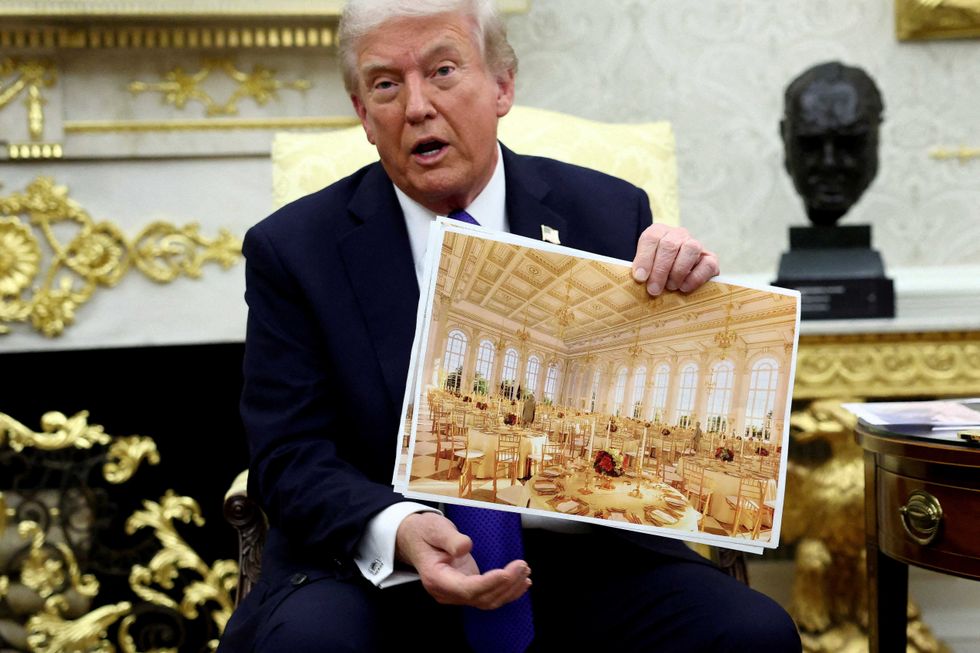
“No political truth is of greater intrinsic value, or is stamped with the authority of more enlightened patrons of liberty: The accumulation of all powers, legislative, executive, and judiciary, in the same hands . may justly be pronounced the very definition of tyranny.”-James Madison, Federalist 47“All the powers of government, legislative, executive, and judiciary, result to the legislative body. The concentrating of these in the same hands, is precisely the definition of despotic government. An ELECTIVE DESPOTISM was not the government we fought for; but one . in which the powers of government should be so divided and balanced among several bodies of magistracy, as that no one could transcend their legal limits, without being effectually checked and restrained by the others.” (emphasis Jefferson’s)- Thomas Jefferson, commentary on Federalist 48Speaker Mike Johnson, presumably on the orders of Donald Trump, has unconstitutionally shut down the House of Representatives for over a month. The result is that Trump can now do pretty much whatever he wants without restraint. He’s effectively King of America, at least for the moment. No limits, no constraints, no oversight. It’s the coup that finally worked. If there is any one principle the Founders of this nation agreed on, it was that the first and primary function of Congress is to prevent a president from seizing king-like powers. It’s repeated over and over throughout their writings and carved into the Constitution itself. That historical reality notwithstanding, “King” Donald has decided, all by himself, to demolish a large chunk of The People’s White House and replace it with a replica of Vladimir Putin’s Winter Palace’s Grand Throne Room so he can entertain billionaires with large, high-dollar fundraisers at the taxpayers’ expense without having to travel all the way to Mar-a-Largo. He didn’t bother to get permission from the National Trust for Historic Preservation, nor did he submit plans for what people are now calling the “Epstein Ballroom” to the National Capital Planning Commission as any other historic building in D. C. would do. Loopholes in the law apparently allowed him to do this, however, because previous generations of lawmakers never imagined a president would be so insane as to one day demolish parts of the White House without consulting Congress or the people, so they saw no need to forbid it. Which leaves only Congress as the single agency that could have thwarted Trump’s imperial plans. As any Constitutional scholar will tell you as would Declaration of Independence author Thomas Jefferson or Father of the Constitution James Madison that’s at the foundation of their job. Congress is supposed to have oversight over the president, to constrain him with laws, budgets, and hearings, and keep his behavior within the law. Like they did when Richard Nixon was bugging the Democratic National Committee, or when Bill Clinton tried covering up his affair, or George W. Bush engaged in illegal torture after lying us into two wars. They should be demanding answers about Trump’s lawless “murders” (quoting Colombia’s president) of people in the Caribbean, his imposing tariffs in violation of Article I of the Constitution, or his ICE agency’s brutality and illegal warantless arrests. But to do that even to have prevented his unilateral tearing down part of the White House the House of Representatives would have to convene oversight hearings and create such a public uproar that Trump would back down, and there’s a real possibility that could have happened, particularly as Republicans like Rep. Marjorie Taylor Greene (R-GA) and Rep. Thomas Massey (R-KY) are starting to stand up to Trump. The only problem is that Congress is on vacation. Apparently because Trump ordered it: we all know that if he wanted the House open, it would be open today. Johnson has shut down the House by sending everybody home and then dragging out the recess. The growing concern is that he’s doing this at Trump’s demand in order to eliminate congressional oversight and thus enhance his now-near-dictatorial power. Johnson has kept the chamber in indefinite recess during a government shutdown the first Speaker in history to do so while refusing to hold even pro forma sessions, seat a duly elected member (Adelita Grijalva, of Arizona), or allow continuing resolutions to reach the floor. This is against the law the supreme law of the land. There is no joint resolution with the Senate allowing for a recess longer than three days, nor has the Senate passed such a standalone resolution. Article I, §5, cl. 4 of the Constitution reads:“Neither House, during the Session of Congress, shall, without the Consent of the other, adjourn for more than three days, nor to any other Place than that in which the two Houses shall be sitting.”Congress didn’t even suspend its functioning for weeks like this during the Civil War or WWII; it’s literally never happened before. So why would Johnson take this unprecedented step? What’s the emergency that’s greater than the War of 1812, WWI, 9/11, or any other crisis? One possible answer is that it’s all about increasing Trump’s power as potentate, so he can do whatever he wants like demolishing part of the White House with no criticism or examination, no hearings or testimony, no experts or historians, from the House of Representatives. By halting committee work, freezing discharge petitions through this naked (and unconstitutional) calendar manipulation, and withholding any date for Congress to reconvene, Johnson obviously fulfilling Trump’s demand has placed the entire legislative branch into a political form of suspended animation. Why does Trump want this? Why does he care about the House of Representatives enough to put Mike Johnson in this difficult, illegal situation? This threat to Johnson’s legacy as Speaker? The House, which only “exists” as a functional body when formally in session (normal or pro forma), has been rendered incapable of introducing bills, issuing subpoenas, or performing any oversight whatsoever of the executive branch, from Trump to Stephen Miller to Russell Vought, Kristi Noem, Pam Bondi, Kash Patel, or anybody else. And even if the Senate were to step in and “legalize” Johnson’s recess, his dragging it out this long or longer would still have the same impact on weakening what’s left of our democracy and handing more and more uncountable power to Trump. What Johnson has pulled off is a “procedural” coup: he (with Trump) now controls whether Congress exists at all. His keeping the House in recess concentrates extraordinary power in the Speaker’s office and, by extension, in Trump, whose directives Johnson slavishly follows. With the calendar erased and committees paralyzed, transparency and accountability over the executive and judicial branches has disappeared; the public can’t track missed votes, can’t demand action, and federal agencies like Vought’s CBO and Noem’s ICE can operate entirely unchecked. Border Czar Tom Homan suddenly has no oversight. Whatsoever. Ditto for Bondi, Noem, FCC Chair Brendan Carr, Patel, Miller, etc. They can do whatever they damn well please, particularly since they appear to believe they’ll get pardoned if they get caught breaking the law. Furthermore, the longer this paralysis continues, the more it normalizes an unbalanced government in which the president acts without legislative restraint. If this continues, or Johnson falls into a pattern of repeatedly recessing Congress whenever Trump requires him to, Trump might as well declare himself king. Without the House, even the Senate can’t act in a meaningful way; the Constitution requires that all legislation involving money including any laws or resolutions that may tie Trump’s hands (since virtually all actions must be paid for) must originate in the House. (Article 7, Clause 1: “All Bills for raising Revenue shall originate in the House of Representatives.”)Without ever proclaiming it out loud, Mike Johnson has accomplished what open insurrection never could: the methodical, bureaucratic nullification of Congress itself, eliminating its ability to perform oversight over Trump. All without even a peep or notice from the mainstream press, who are instead fixated on the government shutdown, seemingly thinking it’s the same thing as, or part of, the House recess. If Johnson doesn’t back down, or if he does temporarily but this becomes a regular thing, our republic will have been really and truly turned into a kingdom complete with a massive new throne room before our very eyes.
In a letter to US senators, Live Nation said the FTC’s claims against it are ‘categorically false’ Source.
Amid congressional deadlock, House Minority Leader Hakeem Jeffries visits three of L. A.’s Black churches to support California’s redistricting effort.